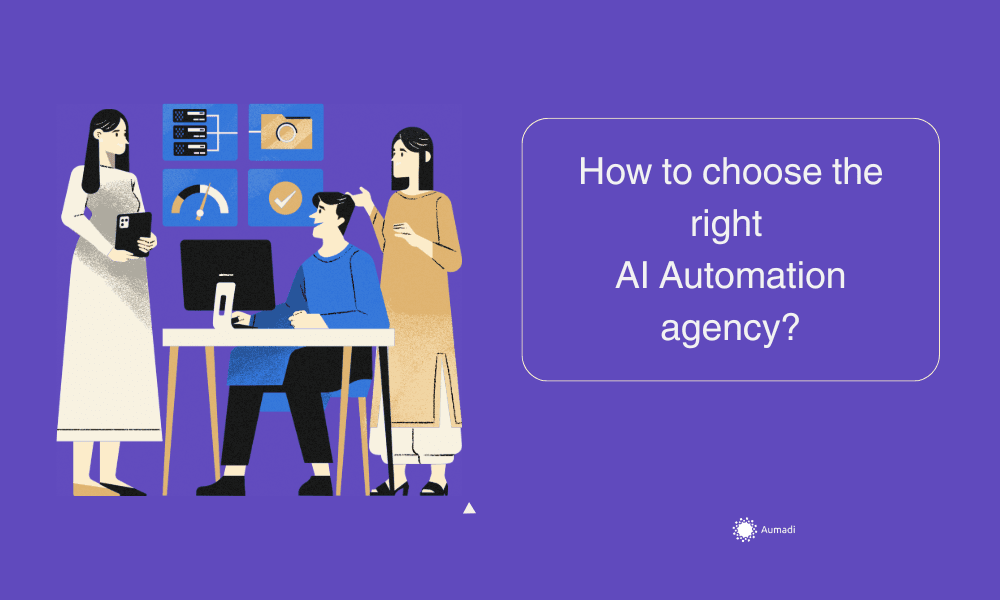
AI automation has no certification directory to filter by, so picking the right partner is harder than it looks. Here is a practical checklist for evaluating any AI workflow automation agency, the different kinds of teams in the category, and where Aumadi fits.
AI workflow automation is one of the fastest-growing ways businesses are cutting manual work out of their operations, connecting tools, automating decisions, and freeing up teams to focus on what actually needs a human. The demand is real, and so is the opportunity, if you partner with the right team.
The harder part is knowing who that right team actually is. Unlike FlutterFlow, where a certification directory gives you a clear first filter, AI automation doesn't have one clean signal to check. So instead of a list, here's a practical way to evaluate anyone you're considering, including us.
If you're evaluating options right now, it helps to know that "AI automation agency" covers a wide range of setups:
None of these is automatically the right or wrong choice. A freelancer might be exactly right for a single, well-scoped workflow. An enterprise consultancy makes sense if you're coordinating automation across ten departments. The best fit comes down to matching the size and shape of your problem to the kind of team you hire, not picking whoever has the biggest marketing budget.
A widely cited MIT study on enterprise generative AI adoption found that the overwhelming majority of enterprise AI pilots deliver little to no measurable return, not because the technology doesn't work, but because most of these projects were built as demos, not production systems, by teams that never intended to stick around long enough to see if they held up under real use.
That's the actual test worth applying to anyone you're evaluating: are they building something that runs in production and keeps running, or are they building something that looks good in a fifteen-minute call and quietly breaks the first time real data hits it.
We didn't start as an AI automation agency. We started building apps on FlutterFlow, and AI workflow automation became a natural extension of that work as clients started asking us to connect their apps to smarter, more automated systems behind the scenes, and that's shaped how we approach it since. We're not selling automation as an abstract concept. We build it as part of a real product, with the same senior-only, fixed-scope approach we use for app development.
We're upfront that we're not a thousand-person consultancy running a thirty-department automation rollout. What we are is a small, senior team that scopes honestly, builds systems meant to run in production, and stays around after launch instead of disappearing the moment the invoice is paid.
Run us through the checklist above along with anyone else you're considering. That's genuinely the fastest way to find the right fit, whether that's us or someone else.
Talk to us about what you're trying to automate. We'll tell you honestly whether it's a good fit for us, or what kind of team would serve you better.

If you have been reading about all the AI tool that have come out and wondering how can I utilise the AI capabilities to enhance your product, you have come to the right place.
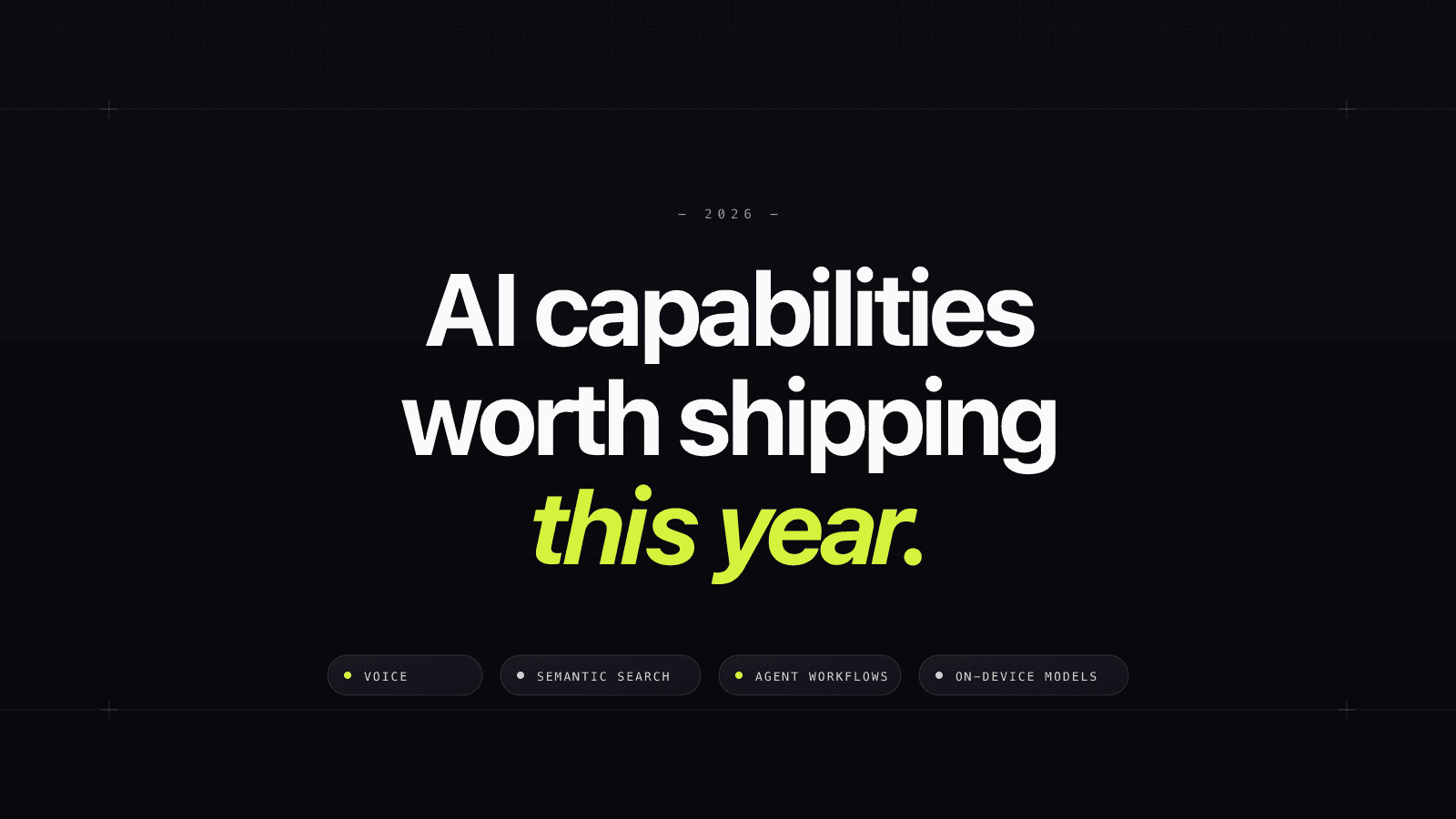
A practical list of AI features you can ship into your SaaS or mobile app this quarter. Voice input, semantic search, smart workflows, on-device models, and the patterns we use at Aumadi when we build them.
.gif&w=3840&q=75&dpl=dpl_5JzJTKBjWYP2oTETih2noNTvu2Xx)
As a startup founder, your resources and time are precious. It might be tempting to rely on the latest AI coding tool to magically build your app, and indeed vibe coding can be a fun way to test an idea. But when it comes to crafting an MVP that you can confidently demo, launch, and grow, building smart from the start is key. The right tool and the right partner make all the difference.
If the post sparked something, we're a discovery call away.
